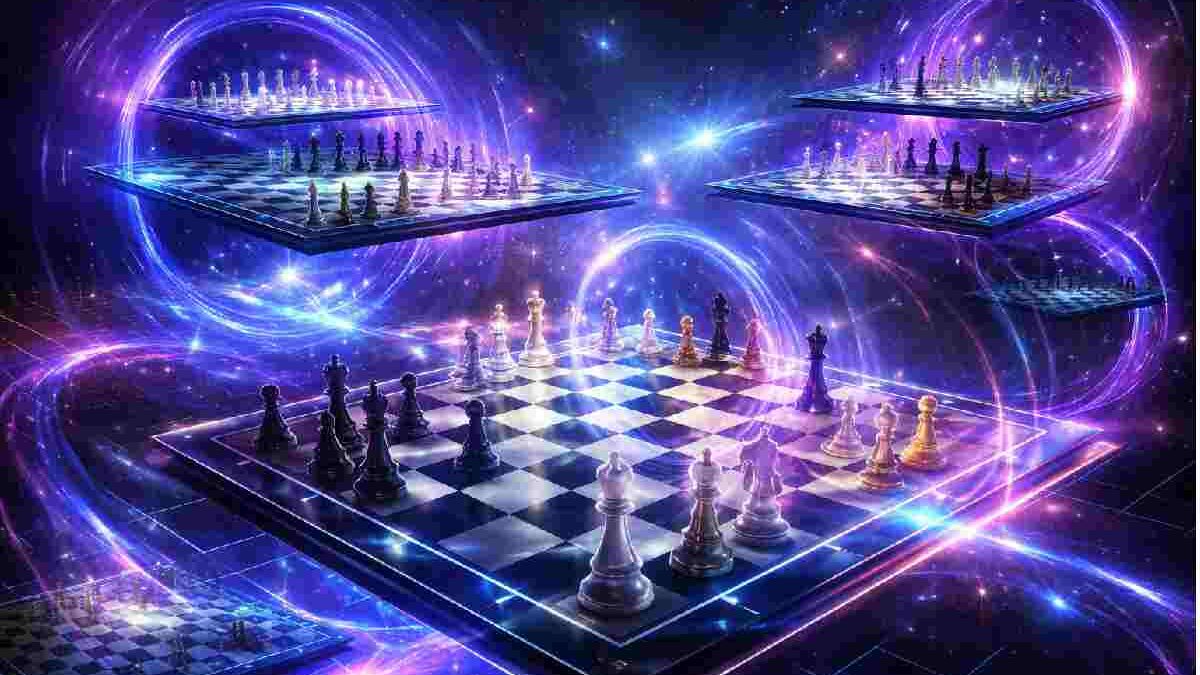


4D Chess isn’t just a game—it’s a concept, a metaphor, and sometimes even a cultural joke that hints at thinking several steps ahead of everyone else. When I first came across the term, I assumed it was just a fancier version of traditional chess. But the deeper I went, the more I realized it’s a whole different mental universe—one that blends strategy, imagination, and a touch of chaos.
Let me walk you through what 4D Chess really is, how it works, why people are fascinated by it, and how you can start thinking like a “4D chess player” yourself.
Table of Contents
What is 4D Chess? (Simple Definition)
At its core, 4D Chess is an advanced conceptual or playable variation of traditional chess that introduces multiple dimensions—often including time travel or parallel boards—into gameplay.
In simple words:
4D Chess = Chess played across multiple boards, timelines, or dimensions where moves can affect the past, present, and future.
Unlike standard chess, where you think a few moves ahead, it challenges you to think across layers of reality.
How 4D Chess Differs from Traditional Chess?
Let’s break it down in a way that actually makes sense.
| Feature | Traditional Chess | 4D Chess |
| Board | Single 8×8 board | Multiple boards or timelines |
| Movement | Linear and turn-based | Non-linear, can involve time jumps |
| Strategy | Predict opponent moves | Predict moves across dimensions |
| Complexity | High | Extremely high |
| Time Element | Fixed progression | Flexible (past/future interactions) |
| Learning Curve | Moderate | Steep |
When I tried understanding 4D Chess for the first time, I realized something important:
It’s not just about smarter moves—it’s about smarter thinking frameworks.
The Origin
4D Chess didn’t come from traditional chess federations or rulebooks. It emerged from:
- Science fiction concepts
- Internet culture and memes
- Experimental game design
- Strategy simulations
Over time, developers and enthusiasts began building actual playable versions of 4D Chess, often involving:
- Parallel timelines
- Branching universes
- Time-travel mechanics
How 4D Chess Works (Conceptual Breakdown)?
Let’s simplify this, because honestly, it can get confusing fast.
- Multiple Boards Exist Simultaneously
Instead of one board, you might have several boards representing:
- Different timelines
- Alternate realities
- Past and future states
- Moves Can Create New Timelines
Making a move doesn’t just affect the current board—it can:
- Split into a new timeline
- Alter a past position
- Create branching possibilities
- Pieces Can Travel Across Time
Yes, this is where things get wild.
Some versions allow:
- Moving a piece back in time
- Changing previous moves
- Affecting future board states
- Winning Conditions Expand
You’re not just checkmating one king—you might need to:
- Control multiple timelines
- Eliminate threats across dimensions
- Prevent paradoxes
Types
Not all 4D Chess games are the same. Here are some common styles:
| Variation Type | Description |
| Timeline-Based | Multiple timelines branch from moves |
| Multiverse Chess | Parallel universes with independent boards |
| Time-Travel Chess | Pieces can move to past or future turns |
| Layered Boards | Stacked boards representing dimensions |
Each variation changes how you approach strategy.
Why 4D Chess is So Popular
You’ve probably heard someone say:
“He’s playing 4D chess while others are playing checkers.”
That phrase alone explains a lot.
- It Represents Deep Thinking
4D Chess has become a metaphor for:
- Strategic genius
- Long-term planning
- Outsmarting opponents
- It Appeals to Gamers and Thinkers
People who love:
- Complex strategy games
- Logic puzzles
- Sci-fi concepts
…are naturally drawn to it.
- It’s Mentally Challenging
Let’s be real—most games eventually become predictable.
4D Chess doesn’t.
Basic Strategy Principles
Even though the game can get insanely complex, some core principles still apply.
Think Beyond the Current Move
- Don’t just react—anticipate
- Visualize multiple outcomes
Control Timelines, Not Just Pieces
- Dominating one board isn’t enough
- You need influence across dimensions
Avoid Creating Weak Branches
- Every move can create a new timeline
- Weak branches can be exploited
Balance Aggression and Stability
- Overextending in one timeline can cost another
4D Chess vs Real-Life Decision Making
Here’s where things get interesting.
4D Chess isn’t just a game—it’s a mindset.
| 4D Chess Concept | Real-Life Application |
| Thinking ahead | Long-term planning |
| Multiple timelines | Considering different outcomes |
| Strategic sacrifice | Short-term loss for long-term gain |
| Parallel decisions | Managing multiple priorities |
When I started thinking in “4D terms,” I noticed something:
Better decisions come from seeing more possibilities.
Common Misconceptions
Let’s clear a few things up.
“It’s Impossible to Understand”
Not true. It’s complex, yes—but learnable with practice.
“It’s Just a Meme”
While it’s popular in memes, actual playable versions exist.
“You Need to Be a Genius”
Nope. You just need patience and curiosity.
Advantages of Learning 4D Chess Thinking
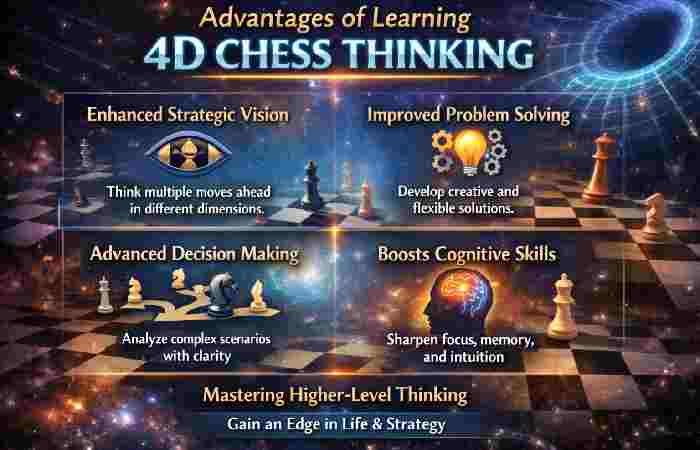
Even if you never play the actual game, the mindset is powerful.
- Improved Strategic Thinking
You start seeing:
- Patterns
- Long-term consequences
- Hidden opportunities
- Better Problem-Solving Skills
Complex problems become easier when you:
- Break them into layers
- Analyze different outcomes
- Enhanced Creativity
Because you’re not stuck in one dimension of thought.
Challenges
Let’s not sugarcoat it—this isn’t easy.
| Challenge | Description |
| Overwhelm | Too many possibilities at once |
| Mental fatigue | Requires intense focus |
| Steep learning curve | Takes time to understand |
| Analysis paralysis | Overthinking can slow decisions |
I’ve personally hit that “brain overload” point where everything just blurs together.
How to Start Learning 4D Chess?
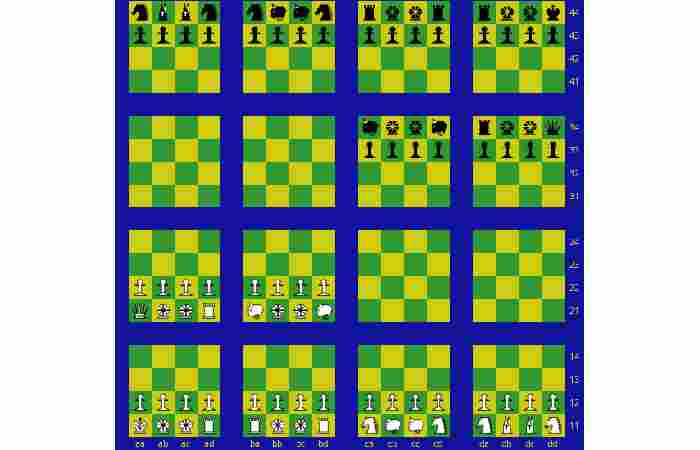
If you’re curious, here’s how I’d recommend starting:
Step 1: Master Traditional Chess
- Understand piece movement
- Learn basic strategies
Step 2: Explore Digital Versions
Look for:
- Online 4D chess simulations
- Time-travel chess variants
Step 3: Practice Visualization
Train your brain to:
- Imagine multiple boards
- Predict branching outcomes
Step 4: Start Small
Don’t try to understand everything at once.
Tips to Think Like a 4D Chess Player
This is where it gets fun.
- Always Ask “What Happens Next?”
Not just once—multiple times.
- Consider Alternative Outcomes
Think:
- “If this fails, what’s my backup?”
- Stay Flexible
Rigid thinking doesn’t work here.
- Learn from Mistakes
Every bad move teaches something valuable.
4D Chess in Pop Culture
Even if you haven’t played it, you’ve probably seen references.
- Used in political commentary
- Appears in memes and internet humor
- Symbolizes high-level strategy
It’s basically shorthand for:
“This person is thinking way ahead of everyone else.”
Is 4D Chess Worth Learning?
Honestly? It depends on what you’re looking for.
You’ll Love It If:
- You enjoy deep strategy games
- You like mental challenges
- You’re curious about complex systems
You Might Struggle If:
- You prefer simple, quick games
- You get overwhelmed easily
Final Thoughts: Why 4D Chess Stays Fascinating
What keeps me hooked about 4D Chess isn’t just the gameplay—it’s the way it reshapes how you think.
It pushes you to:
- See beyond the obvious
- Plan beyond the immediate
- Think beyond a single path
And in a world where most decisions are short-sighted, that’s a pretty powerful skill.
Conclusion
4D Chess is more than just an advanced version of a classic game—it’s a mental framework that challenges you to think across dimensions, timelines, and possibilities. Whether you approach it as a game, a metaphor, or a learning tool, it offers something unique: a chance to stretch your thinking far beyond the ordinary. And once you start thinking in 4D, regular chess—or even real-life decisions—might never feel the same again.