
Workout Like a Soccer Player: Different Routines You Can Do – If you keep asking yourself how to Workout like a soccer player without taking a step, you still need to prepare. There are different routines you can do to become like one of them. Going to soccer training on time and training hard every day at practice will make you look like them but different from the exact way they look.
You may think you train harder than them on your own, but to be realistic, the only way you start taking a step forward is to do more than them and imitate their Workout. Giving that extra push and effort will mark the difference in deciding whether you are ready to take the step like when trying to improve your Premier League predictions making skills.
In your attempt to achieve your goals, you will see yourself training alone, all on your own, and if you think you can do that, you can get a trainer for yourself. However, training by yourself is challenging because usually, at training, you have your coach to tell you what to do and guide you throughout every session.
We have provided a list of different routines you can do if you want to work out like a soccer player. So, continue reading our article below for the list.
Table of Contents
What Train Like a Soccer Player Means
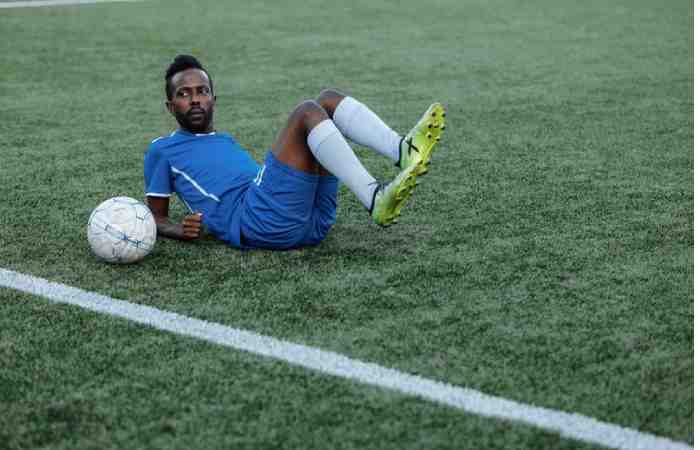
Training like a soccer player means combining:
- Aerobic endurance (to last the match),
- Anaerobic capacity / repeat-sprint ability (to perform repeated high-intensity runs),
- Strength and power (for tackling, jumping, acceleration),
- Agility and change-of-direction (to evade opponents),
- Ball skills and decision-making under fatigue, and
- Recovery, mobility, and injury prevention.
It’s not just endless running or lifting heavy. It’s specific — targeted sessions that blend fitness with football skills.
The essentials: Warm-up & prehab
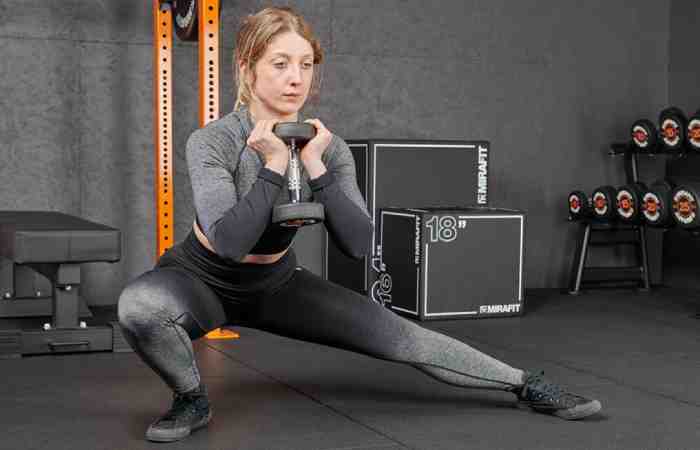
A soccer-specific warm-up prepares nervous system, muscles, joints and the brain.
5–10 minute dynamic warm-up (example):
- Light jog or skipping — 3 minutes
- Dynamic leg swings (front→back, side→side) — 10 each leg
- Walking lunges with reach — 8 each side
- A-skips / B-skips — 20m each
- High knees, butt kicks — 20m each
- 3 progressive sprints (50%, 80%, 95%) — 30m
Prehab (3–8 min) — basic daily routine:
- Banded lateral walks (glute activation) — 2×10 steps each side
- Nordic hamstring eccentrics or single-leg deadlift (light) — 2×6–8
- Ankle mobility and 1-leg balance — 2 sets
Why: reduces injury risk (especially hamstrings and ankles), primes fast-twitch fibers, improves movement quality.
Strength & power — the backbone
Soccer players require strength for speed, stability and injury prevention. But heavy lifting alone won’t make you quick on the pitch — pairing strength with plyometrics and sprint work is the ticket.
Sample strength session (30–45 min):
- Back squat or trap-bar deadlift — 3–4 sets x 4–6 reps
- Romanian deadlift or single-leg deadlift — 3 x 6–8
- Bulgarian split squats — 3 x 8 each leg
- Pull-ups or bent-over rows — 3 x 6–8
- Core: Pallof press or dead bug — 3 x 10–15
Progression tips:
- Build strength first (8–12 weeks of 3–5 sets at 6–8 reps), then shift to heavier loads and lower reps to convert to maximal force.
- Add plyometric work the same day but after strength (or on separate days) to improve power (depth jumps, bounds, box jumps — low volume, high quality).
Single-Leg Squat
Single-leg squat is the first Workout on our list you can do just like a soccer player, and it helps. When you push off into a sprint, you practically put all your power into one leg at a time. At the same time, other regular squats are great for activating vital muscles in your legs, quads, glutes, and hamstrings.
Single-leg squats help train each of your legs to take the total weight of the body as they would do in a sprint to help you get the power you will need to launch yourself forward when chasing a fast-through ball, and below is how to do them;
- Stand on one foot and hold your other leg out in front of you as close to hip height as you can get.
- Slowly bend the knee of your supporting leg, and hold your arms out in front of you, which will help you stay balanced.
- Lastly, lower yourself as low as you can, then hold that position for a second before slowly rising back to your starting position.
Dumbbell Bench Step-Ups
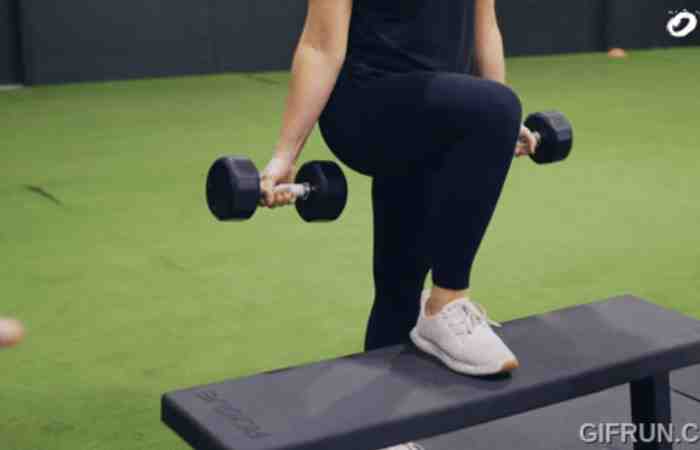
Dumbbell Bench Step-ups are another routine you can do just like a soccer player. Doing dumbbell bench step-ups helps to develop the same muscle group you will be using when going from a sprint to a jump to get those satisfying set-piece headers, and the first step on how to to do is; stand next to a bench and hold a pair of dumbbells at arm’s length at your side.
The second step is placing your food onto the bench and extending your leg until it is straight to push your body off the ground. Lastly, keep your other foot elevated and hold the position for two seconds before returning to the starting position.
Lateral Band Walks and Hurdle Sprints
Lateral band walks and hurdle sprints help activate your glutes and help to prevent injury from muscle fatigue or overstretching. It can also be from the wrath football boot of an oncoming defender. You will need a resistance band around your legs above your knees while moving in the opposite direction.
Weighted Sled Drags
During this training, the sled drag puts heavy resistance on all the muscles you use to drive yourself forward: the calves, core, glutes, shoulders, and back. Working on these muscles hard has a big payoff regarding acceleration because it helps increase your power output and ground reaction forces.
Burpee Pull-Ups
The burpee pull-ups help drive your body to the limit while working a wide range of muscle groups. The muscle groups may include your chest, arms, glutes, quads, and hamstrings. They are ideal for conditioning and endurance because they increase your heart rate rapidly.
Medicine Ball Push Ups
Another routine you can do, just like a soccer player, is medicine ball push-ups. Push-ups will surely be the first thing that comes to mind when you think of agility. These medicine ball push-ups help you improve your balance. Gareth Bale incorporates medicine push-ups in his gym.
To accomplish this, the initial thing to be done would be to hold a medicine ball availed in front of you and then moving into a press-up position by keeping your hand on the ball located under your chest and your toes to the floor. Finally, gradually bring yourself down by bringing your arms down such that the chest comes in contact with the ball. Then, place yourself back in the beginning point and give yourself pressure using each of your arms.
Training Modalities and when to use them
| Training type | Primary benefits | Typical session structure | Best for |
| Aerobic Endurance | Base fitness, recovery between sprints | 30–60 min steady runs, zone 2 heart rate or long intervals | Building match endurance |
| High-Intensity Interval Training (HIIT) | Improves VO₂max & repeat-sprint ability | 4–8 x 3–4 min hard with 2–3 min easy | Time-efficient endurance + power |
| Repeated-Sprint Training | Match-like sprint ability | 6–12 short sprints (10–40m) with brief rest | Sprint conditioning |
| Strength Training | Force production, injury prevention | 3–5 compound lifts, 3–5 sets, 4–8 reps | Power, tackling, acceleration |
| Plyometrics | Explosive power, reactive strength | Jumps, bounds, short sets (3–5 reps per rep) | Jumping, sprint starts |
| Agility / COD drills | Change-of-direction mechanics | Short drills, 10–30s reps, high focus | Dribbling, evasion |
| Skill training | Ball control, decision making | 15–45 min ball work, small-sided games | Technical match performance |
| Mobility & Recovery | Range of motion, longevity | Daily mobility, foam rolling, active recovery | Injury prevention & movement quality |
Nutrition basics for soccer-style training
- Before training/match (2–3 hours): 1–3 g/kg carbs + 20–30 g protein (e.g., rice + chicken).
- 1 hour before: small carb snack (banana, toast) if needed.
- During long sessions/matches: 30–60 g carbs/hour (sports drink, gels) for sustained energy.
- After training: 20–30 g protein + carbs (0.5–0.8 g/kg carbs) within 60–90 min to recover glycogen and repair muscle.
- Daily protein target: ~1.6–2.0 g/kg bodyweight for training athletes.
- Hydration: drink regularly; weigh yourself pre/post long sessions to check sweat loss.
Supplements that can help: creatine monohydrate (strength & recovery), whey or plant protein for convenience, and caffeine for short-term performance (use carefully).
Academic Courses in Sports Science, Physical Education & Football‑Focused Training (India)
Here are some academic pathways and programs in India (and related international options) that can help you train like a soccer player, work in soccer performance, coaching, or sports science:
Bachelor’s & Master’s Degrees in Sports Science / Physical Education
These programs provide scientific training, conditioning methods, coaching principles, and sports performance knowledge that also apply to soccer‑specific workouts and athlete development.
| Institution | Program / Focus | Why It Matters |
| Tamil Nadu Physical Education & Sports University | BSc/MSc/MPED/BPED in Physical Education & Sports Science | India’s first sports university with departments in exercise physiology, biomechanics, sports psychology, and coaching. |
| Lakshmibai National College of Physical Education | Undergraduate & postgrad courses in physical education and sports training | Trains future coaches, trainers, and performance specialists. |
| Chandrashekhar Agashe College of Physical Education | Sports and physical education degrees with emphasis on exercise science | Good pathway into coaching and athlete conditioning. |
| Isst Pune – Sports Science (BSc) | Sports science undergraduate focused on strength, conditioning, physiology | Useful base for conditioning soccer athletes. |
| Reva University – BSc Sports Science | Covers strength & conditioning, biomechanics, nutrition, sports psychology | Directly supports athletic performance training. |
Football‑Focused Coaching & Conditioning Courses
While many Indian universities don’t have specialized soccer athlete‑specific degrees, there are certificates and coach education programs (national & international) that help you design workouts, strength & conditioning plans, and coaching methods.
Online & Specialized Programs
- Certificate in Strength & Conditioning for Soccer Performance – Focuses on soccer‑specific endurance, strength, injury prevention and conditioning methods for players and coaches.
- Soccer Science & Performance Courses – Covers physical demands, training loads, nutrition, and performance analysis relevant for elite soccer.
These are often online/remote courses suitable for fitness trainers, coaches, or players who want soccer‑specific athletic training knowledge.
Sports Colleges in India With Football Training
In India, several sports schools and academies integrate academic schooling with structured football training (especially at junior levels):
- Major Dhyanchand Sports College – Residential sports college offering football and other sports training integrated with academics.
- Bir Bahadur Singh Sports College – Offers football alongside academic curriculum for school‑age athletes.
- Krida Prabodhini (Maharashtra) – State‑run sport development system nurturing young athletic talent including football.
Coaching Licenses & Practical Soccer Education (India/AFC)
For those aiming to coach professionally:
- AIFF / AFC Coaching Licenses – India football federation courses from License C → B → A include conditioning and tactical modules.
- AFC Conditioning Coach Courses – Enhance understanding of physical development and soccer conditioning in a formal coaching pathway.
These are practical certifications tied to professional coaching standards.
How These Academic Paths Help You “Workout Like a Soccer Player”
Studying these programs gives you:
Scientific foundation – exercise physiology, biomechanics, and sports nutrition to design soccer‑specific workouts
Conditioning skills – endurance, strength and agility training tailored to football demands
Coaching ability – tactical, psychological and team performance knowledge
Career opportunities – as a coach, strength & conditioning trainer, sports scientist, or academy instructor
Academic Courses in Sports Science(UK)
Here’s a comparison table of academic programs in the UK that support training like a soccer player — focusing on sports science, performance, coaching, and strength & conditioning:
| University / Program | Degree & Focus | Key Skills / Relevance to Soccer Performance |
| St Mary’s University, Twickenham | BSc Strength & Conditioning Science | Teaches anatomy, exercise physiology, performance coaching; prepares students for roles conditioning athletes. |
| UCFB (Manchester) | BSc Sports Coaching Science | Combines practical coaching, performance analysis, and scientific understanding; useful for football coaching and player development. |
| Middlesex University | BSc Football Coaching & Performance | Focuses specifically on football coaching, performance analysis, player development, and industry placements. |
| Hartpury University | BSc Strength & Conditioning | Covers applied exercise physiology, recovery, performance monitoring, biomechanics relevant to athlete development. |
| University of Worcester | BSc Football Performance & Coaching | Combines practical coaching with sport science and performance strategy; includes work placements. |
| University of Essex | MSc Strength & Conditioning | A postgraduate focused on designing sport performance training, monitoring athletes, and performance coaching. |
| Nottingham Trent University | MSc Strength & Conditioning | Postgraduate programme with strong emphasis on applied sport performance and coaching skills. |
| University of Salford | MSc Strength & Conditioning | Research‑informed master’s designed to develop high‑performance training skills suitable for elite sport roles. |
How These Programs Help You Train Like a Soccer Player
Sports Science & Exercise Physiology – Understand how the body adapts to endurance and strength training, crucial for soccer conditioning.
Football Coaching & Performance – Courses explicitly tailored to football help with tactical understanding, performance analysis, and player development.
Strength & Conditioning – Focus on explosive power, agility, and recovery — key traits for athletes and coaches aiming at elite soccer environments.
Performance Analysis & Applied Skills – Many degrees include real‑world placements or lab work, preparing graduates to apply science in training settings.
Academic Courses in Sports Science(USA)
Here’s a table of academic programs in the USA that support training like a soccer player — from sport science and coaching to performance and conditioning education:
| University / Program | Degree / Certificate | Focus Relevant to Soccer Performance |
| Lasell University | Certificate in Soccer Science & Performance Coaching | Soccer‑specific training science, strength & conditioning, nutrition, performance analysis tailored to soccer. Fully online. |
| West Virginia University | BSc in Coaching and Performance Science | Undergraduate sport coaching & performance science — prepares students to work with high‑performance athletes. |
| United States Sports University | MSS in Sports Coaching (Master’s) | Advanced coaching methodologies including soccer coaching, strength & conditioning, sport psychology and administration. |
| Various US Universities | BS / MS in Kinesiology / Exercise & Sports Science | Foundation in exercise physiology, biomechanics, strength & conditioning useful for soccer performance roles (e.g., University of Michigan, UNC Charlotte, etc.). |
| Online Exercise & Sports Science Programs (e.g., USCA) | MS Exercise & Sports Science with Strength & Conditioning | Advanced degree preparing strength & conditioning professionals for sport performance training. |
How These Help You “Workout Like a Soccer Player”
- Soccer‑Focused Curriculum: Lasell’s certificate integrates nutrition, strength & conditioning, and performance analysis specific to soccer players.
- Coaching & Performance Science: Undergraduate coaching degrees teach how to design conditioning and training programs for athletes.
- Strength & Conditioning Expertise: Master’s or advanced sport science degrees build scientific knowledge to optimize physical performance (speed, endurance, agility).
- Advanced Coaching Methods: Sports coaching master’s programs cover psychology, tactics, and physical preparation relevant to soccer environments.
Ways These Programs Connect to Soccer Training
Strength & Conditioning: Learn how to structure workouts to improve power, speed, and endurance — core components of a soccer player’s fitness.
Sport Science Integration: Understand the physiology, biomechanics, and recovery strategies that elite players use.
Performance Analytics & Coaching: Make evidence‑based decisions to optimize drills, practice sessions, and in‑game performance.
Common mistakes & how to avoid them
- Only doing long slow runs — misses the repeat-sprint demands. Add intervals & sprint work.
- Too much plyo volume — leads to soreness and injury. Low volume, high quality.
- Neglecting strength — strength improves speed and prevents injury. Keep at least 2 weekly strength sessions.
- No skill work under fatigue — transfer suffers. Combine fitness with technical drills.
- Poor recovery — sleep, nutrition, and mobility are non-negotiable.
Sample 7-day weekly program (balanced, modifiable)
| Day | Session focus | Details |
| Monday | Strength + Plyometrics | Strength session (squats, deadlifts, rows) + 10–15 min plyo (low volume) |
| Tuesday | Speed + Technical | Warm-up, acceleration sprints (6x20m), 20 min ball work (1v1, passing) |
| Wednesday | Aerobic/Recovery | 30–45 min easy ride or zone-2 run + mobility |
| Thursday | HIIT + Skills | 4×4 min intervals OR small-sided games (4v4) for 25–30 min + finishing drills |
| Friday | Strength (lower volume) + Agility | Lighter strength (2–3 sets), COD drills, ladder work |
| Saturday | Match or High-intensity SSG | Full match or 60–90 min high-intensity small-sided games |
| Sunday | Rest / Active Recovery | Mobility, foam-roll, walk, or easy swim |
Adjust: if you have a match on Sunday, shift sessions earlier and make Friday lighter.
Final words
Training Like an soccer player, is the combination of specific conditioning, strength and plyometrics, technical work with fatigue, and recovery as a priority. Shorter and intense sessions should be taken and you should always practice technique when you are tired, at least then you can win a match.