
Basketball – When you look to play professionally, you should know that a few things must be checked. As a professional player, you must ensure that your fitness level remains at a specific range to make it easy to deliver consistently. You don’t want to drop below-par stats every time you play, which can lead to getting benched.
As youngsters look to make it into the top March Madness picks and secure a spot in the top draft picks, having solid health would help. It is good to develop a good habit of checking your health and tracking your body to know if you’re pushing it too much or can go a little further, depending on what the devices are reading.
Table of Contents
What Are Basketball Health Tips?
Basketball health tips are guidelines and practices that help players stay fit, prevent injuries, and perform at their best. They cover areas like physical conditioning, nutrition, recovery, mental focus, and proper technique.
Key Goals:
- Enhance Performance – Build strength, agility, speed, and endurance.
- Prevent Injuries – Reduce the risk of sprains, strains, and joint injuries.
- Support Recovery – Ensure muscles and joints recover properly after training or games.
- Promote Overall Health – Encourage healthy habits that benefit the whole body and mind.
Basketball Health Tips
Here’s a thorough guide to basketball health tips — covering physical conditioning, injury prevention, nutrition, and recovery to help you stay at your peak on the court:
| Category | Tips / Recommendations | Benefits |
| Warm-Up & Stretching | – 5–10 min dynamic warm-up (jog, high knees, arm circles) – Stretch calves, hamstrings, quads, shoulders, wrists | Prepares muscles, improves flexibility, reduces injury risk |
| Strength & Conditioning | – Core exercises: planks, Russian twists – Legs: squats, lunges, calf raises – Upper body: push-ups, resistance bands – Agility drills: ladder, cone drills | Increases power, stability, speed, and agility on court |
| Nutrition & Hydration | – Eat carbs 1–2 hrs before game (banana, oatmeal) – Drink water or electrolytes during practice – Post-game: protein + carbs (eggs, nuts, smoothies) | Maintains energy, aids recovery, prevents cramps and fatigue |
| Injury Prevention | – Wear supportive basketball shoes – Use braces/tape for weak joints – Focus on proper jumping, landing, and pivoting – Stop if you feel sharp pain | Reduces risk of ankle, knee, wrist, shoulder, and muscle injuries |
| Recovery & Rest | – Cool down 5–10 min light jog & stretching – Sleep 7–9 hrs/night – Ice, foam roll, or elevate strained muscles | Promotes muscle repair, reduces soreness, prevents overuse injuries |
| Mental Health & Focus | – Set goals and visualise performance – Practice stress management & relaxation | Improves concentration, confidence, and reduces burnout |
| Cross-Training | – Swim, cycle, or yoga on off-days | Maintains fitness without overloading basketball-specific muscles |
Why These Tips Are Important
- Prevent Injuries
- Basketball involves fast movements, jumps, and sudden changes in direction.
- Following warm-ups, stretching, and proper technique reduces risks of ankle sprains, knee injuries, and muscle strains.
- Enhance Performance
- Strength, conditioning, agility, and focus exercises help players jump higher, move faster, and react quicker.
- Good nutrition and hydration maintain energy levels during long practices or games.
- Support Recovery
- Cool-down routines, foam rolling, and adequate sleep allow muscles and joints to repair, reducing soreness and fatigue.
- Faster recovery means you can train more consistently without setbacks.
- Boost Mental Focus & Confidence
- Goal-setting, visualization, and stress management improve decision-making, concentration, and resilience on the court.
- Promote Long-Term Health
- Following health tips ensures healthy joints, strong muscles, and cardiovascular fitness, reducing the risk of long-term injuries.
- Encourages a lifestyle of discipline, proper diet, and physical activity.
- Maximize Longevity in the Sport
- Athletes who follow proper health tips can play longer, avoid burnout, and maintain high performance through their career.
Youth Basketball Nutrition Plan: Fueling Young Athletes for Energy and Growth
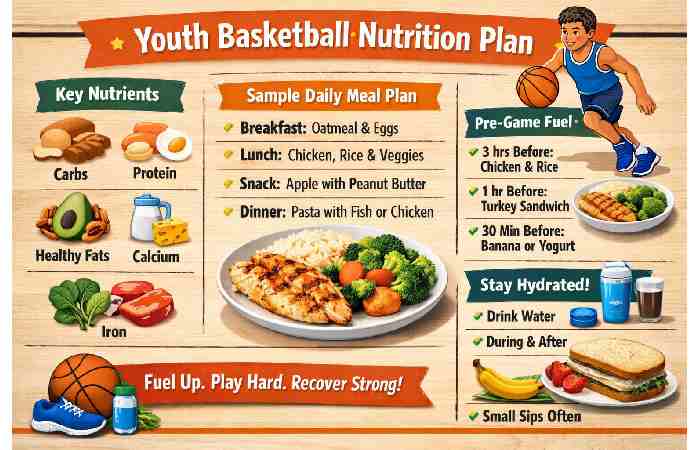
A youth basketball nutrition plan is a systematic diet that provides youthful players with the ultimate mix of carbohydrates, protein, fats, vitamins and hydration to maintain their sporting performance as well as a healthy growth.
Unlike the adult players, young players also need nutrients that are not only necessary per sports performance, but also physical development, brain activity and immune system.The aim is not to diet but to eat regularly, eat in a guideline and intelligent snacks all day.
The Importance of Nutrition on Young Basketball Athletes
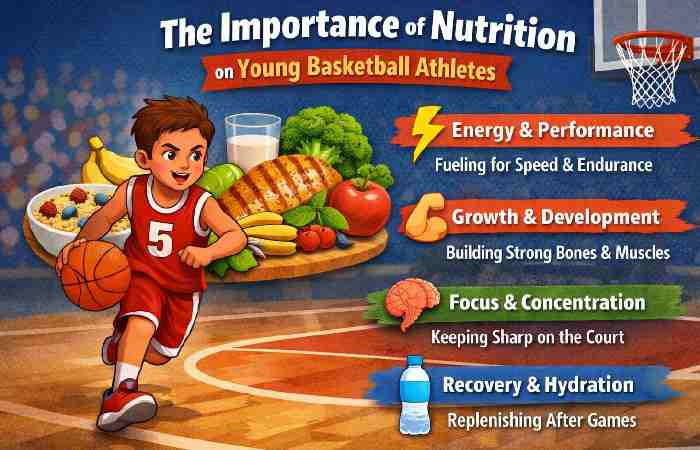
In basketball, there are sudden activities such as high energy, quick reflexes and endurance. Lack of appropriate fuel can make young sportsmen feel fatigued, unconcentrated, or slow to recuperate after a match.
The nutrition plan makes players:
- Have consistent levels of energy during games.
- Enhance training recovery in muscles.
- Develop powerful bones and muscles.
- Be psychologically alert to the court.
- Minimize the threat of injuries and fatigue.
Even minor changes in the diet can have a significant difference on the performance and mood of a young player.
Key Nutrients Every Youth Basketball Player Needs
Different nutrients play different roles in supporting athletic performance and growth.
| Nutrient | Role in the Body | Best Food Sources |
| Carbohydrates | Main energy source for running and jumping | Rice, oats, whole-grain bread, pasta, fruits |
| Protein | Builds and repairs muscles | Eggs, chicken, fish, beans, yogurt |
| Healthy Fats | Supports brain function and long-lasting energy | Nuts, seeds, avocado, olive oil |
| Calcium | Strengthens bones | Milk, cheese, yogurt, leafy greens |
| Iron | Helps carry oxygen to muscles | Spinach, red meat, beans, lentils |
Young athletes should eat a balanced combination of these nutrients instead of focusing on just one type of food.
Sample Daily Meal Plan for Youth Basketball Players
A well-structured daily eating schedule helps keep energy levels stable.
| Time | Meal | Example Foods |
| Breakfast | Energy-boosting start | Oatmeal with banana and milk, scrambled eggs |
| Mid-morning snack | Light fuel | Apple with peanut butter |
| Lunch | Balanced meal | Rice, grilled chicken, vegetables, yogurt |
| Pre-practice snack | Quick energy | Whole-grain toast with honey or a banana |
| Dinner | Recovery meal | Pasta, fish or chicken, salad |
| Evening snack | Light recovery snack | Greek yogurt or a smoothie |
Eating every 3–4 hours keeps young athletes energized throughout the day.
Best Pre-Game Foods for Basketball Players
What a player eats before a game can strongly influence their performance.
Ideal pre-game meal characteristics:
- High in carbohydrates for energy
- Moderate protein for muscle support
- Low in heavy fats to avoid stomach discomfort
| Pre-Game Time | Food Suggestions |
| 3–4 hours before game | Rice with chicken and vegetables |
| 2 hours before game | Sandwich with turkey and fruit |
| 30–60 minutes before game | Banana, yogurt, or granola bar |
Avoid sugary sodas or greasy fast food before playing because they can cause energy crashes.
Smart Snacks for Young Athletes
Snacking is essential for youth athletes because they burn calories quickly.
Healthy snack ideas include:
- Fruit with yogurt
- Peanut butter sandwich
- Homemade smoothies
- Trail mix with nuts and raisins
- Whole-grain crackers with cheese
These snacks provide a quick energy boost without making players feel too full before activity.
Hydration: The Often Forgotten Performance Factor
Water plays a huge role in sports performance. Even mild dehydration can cause fatigue, headaches, and slower reaction times.
Hydration tips for youth basketball players:
| Time | Hydration Recommendation |
| Before practice | 1–2 glasses of water |
| During activity | Small sips every 15–20 minutes |
| After the game | Water plus fruits or electrolyte drinks |
For most youth games, water is enough, though longer tournaments may require sports drinks to replace electrolytes.
Post-Game Recovery Nutrition
After a game or intense practice, the body needs nutrients to repair muscles and replenish energy stores.
The best recovery meal contains:
- Carbohydrates to restore energy
- Protein to rebuild muscle
- Fluids to rehydrate the body
Examples of good recovery meals include:
- Chicken and rice with vegetables
- Turkey sandwich with fruit
- Chocolate milk and a banana
- Yogurt with granola
Eating within 30–60 minutes after activity helps the body recover faster.
Health Benefits of Basketball
Cardiovascular Fitness
- Basketball involves running, jumping, and quick movements, which strengthen the heart and lungs.
- Regular play improves endurance, circulation, and overall cardiovascular health.
Muscle Strength & Endurance
- Engages legs, core, arms, and shoulders through shooting, dribbling, and defense.
- Builds lean muscle, strength, and stamina, improving overall body tone.
Weight Management
- High-intensity gameplay burns calories quickly (approx. 400–600 kcal per hour).
- Helps reduce body fat and maintain a healthy weight.
Bone Health
- Jumping and running put stress on bones, which strengthens them and helps prevent osteoporosis.
Improved Coordination & Agility
- Requires hand-eye coordination, quick reflexes, and precise movements.
- Enhances balance, footwork, and overall motor skills.
Mental Health & Stress Relief
- Physical activity releases endorphins, reducing stress, anxiety, and depression.
- Focus, strategy, and teamwork enhance cognitive function and mental sharpness.
Teamwork & Social Skills
- Basketball is a team sport that improves communication, leadership, and social interaction.
- Builds discipline, sportsmanship, and collaborative skills.
Flexibility & Range of Motion
- Continuous movement, stretching, and changing direction increase joint flexibility and mobility.
Improved Reflexes & Decision-Making
- Fast-paced gameplay trains quick thinking, decision-making under pressure, and reaction time.
Overall Longevity & Health
- Regular physical activity through basketball reduces the risk of chronic diseases like diabetes, obesity, and hypertension.
- Promotes a healthy lifestyle with lifelong benefits.
Basketball Safety Rules
| Category | Rules / Guidelines | Purpose / Benefit |
| Playing Area | – Use a clean, dry court free of obstacles – Check hoops, nets, and flooring for safety | Prevents slips, trips, and collisions with equipment |
| Footwear & Gear | – Wear proper basketball shoes with ankle support – Use mouthguards, knee/elbow pads if needed – Avoid jewelry | Reduces risk of ankle sprains, cuts, and joint injuries |
| Warm-Up & Stretching | – Perform dynamic warm-up for 5–10 min – Stretch major muscle groups | Prepares muscles, improves flexibility, and reduces strains |
| Gameplay Rules | – Avoid pushing, tripping, or holding opponents – Follow foul and contact rules strictly – Maintain safe spacing | Reduces collisions, falls, and intentional injuries |
| Jumping & Landing | – Use proper form when jumping or rebounding – Land on balls of feet, bend knees to absorb impact | Prevents ankle, knee, and lower back injuries |
| Dribbling & Passing | – Keep heads up to avoid collisions – Communicate with teammates | Avoids accidental bumps, head injuries, or collisions |
| Hydration & Breaks | – Drink water regularly – Take breaks during long practice or games | Prevents dehydration, cramps, and heat exhaustion |
| Injury Response | – Stop playing if injured – Ice, elevate, and seek medical help if needed – Notify coach or staff immediately | Ensures proper care and prevents worsening injuries |
| Spectator & Court Safety | – Keep spectators off the court – Clear sideline objects and equipment | Prevents accidents for players and bystanders |
| Respect & Sportsmanship | – Follow referee and coach instructions – Avoid aggressive behavior or risky moves | Maintains a safe and fair playing environment |
Disadvantages of Basketball
| Category | Disadvantages / Risks | Explanation / Impact |
| Injury Risk | – Ankle sprains, knee injuries (ACL, meniscus) – Muscle strains (calves, hamstrings, quads) – Finger/wrist injuries | High-impact movements, jumping, and collisions can cause acute or chronic injuries |
| Physical Strain | – Overuse injuries (shoulder, elbow, back) – Stress on joints | Repeated running, pivoting, and shooting can strain muscles and joints over time |
| Time Commitment | – Requires regular practice and games – Can interfere with studies or work | Competitive basketball demands significant time and energy |
| Mental Stress | – Pressure to perform in games – Stress from competition or losing | Can lead to anxiety, frustration, or burnout if not managed properly |
| Weather/Environmental Dependence | – Outdoor basketball affected by rain, heat, or cold | Limits playing opportunities and may affect safety on slippery or hot surfaces |
| Cost | – Shoes, gear, membership fees, training | Quality equipment and club participation can be expensive |
| Social Pressure | – Peer pressure to perform well – Potential for aggression or unsportsmanlike behavior | May affect self-esteem or create tension among teammates |
Conclusion
Knowing how often you should visit the doctor will help to improve your health when you start playing professionally. It is an exciting way to be a better player, and you can focus on the essential parts of your game. So, you should ask if you don’t know how often you should go for checks.