
 Khizrana Begum
Informational Content Writer
Khizrana Begum is an informational content writer who creates clear, structured and reader-friendly articles across general knowledge, technology, digital topics, lifestyle and practical everyday subjects.
Read Full Bio of Author →
Informational Content Writer
 Sameena Begum
Content Reviewer
Sameena Begum is a content reviewer who reviews selected QuoraBlog articles for clarity, readability, organisation, consistency and responsible presentation.
Read Full Bio of Reviewer →
Content Reviewer
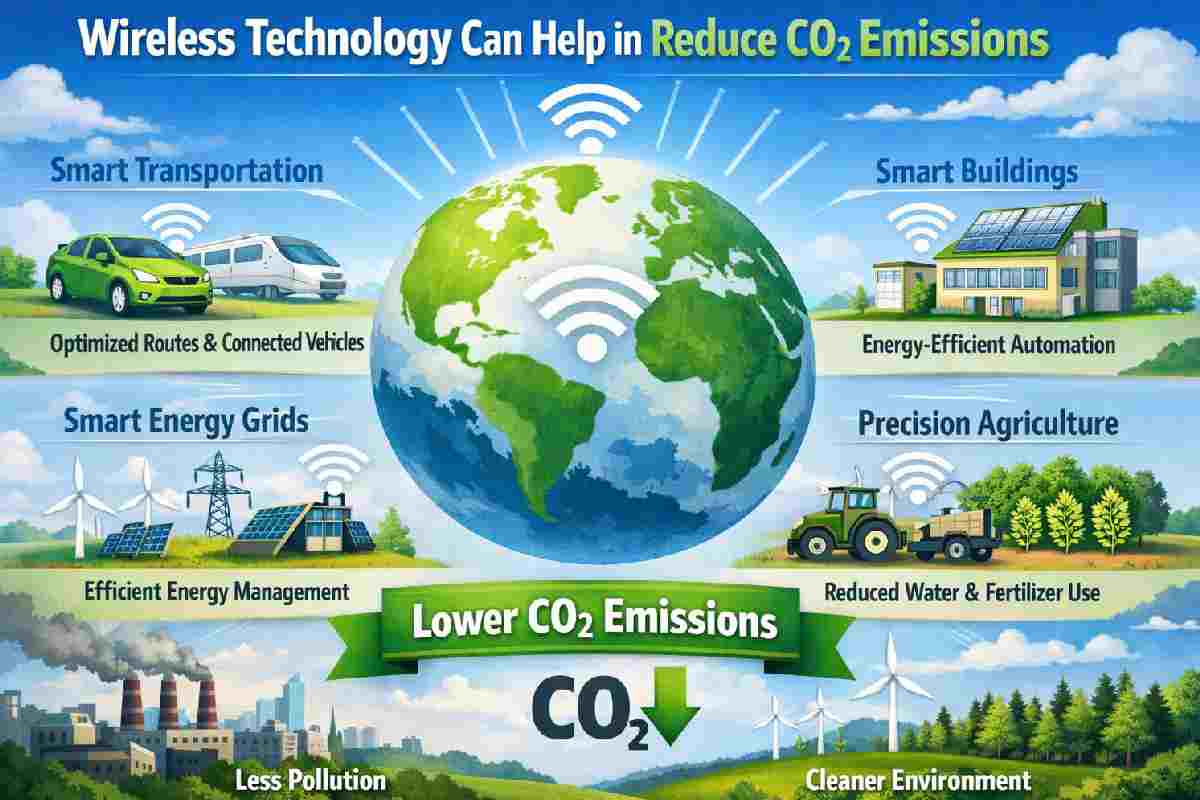
Wireless Technology can Help Reduce CO2 Emissions – “It might not be the obvious starting point for property developers to reach their CO2 emissions reduction targets,” said Jamie Johnson, CEO of FJP Investment, “but wireless connectivity technology can help them achieve them.”
Along with many other countries, the UK has set itself a target of reaching net zero emissions by 2050, and by 50% by 2030. As part of the government’s strategy to achieve these targets, they have said that all new homes will not be allowed to install gas and oil boilers by 2025, only 3 short years away. Alternatively, these homes are intended to be heated with low-CO2 appliances.
That the government has made heating our homes a focus of their attention is no surprise given that at least 14% of the UK’s emissions derive from warming our homes. In other words, the ban on these heating methods will have a dramatic impact on the UK’s overall CO2 emissions.
In addition to the banning of gas and oil boilers, the UK government has pushed for the installation of smart meters and automated meter readers (AMRs). These meter readers will give both developers and homeowners greater control over their energy use with real time and accurate energy use data. It is expected that more developers will adopt these meters as standard when building new homes as it will help them attain their goal commitments and bring them in line with other industries using innovative technologies to reduce emissions.
Table of Contents
Smart meters
Smart meters have numerous benefits in helping reduce emissions. They allow the users to see precisely how much energy they are consuming and at what times they are using it most. They also allow for accurate billing and can help reduce utility bills.
It’s important to note, however, that smart meters are not just for gas and electricity; they are also used to help achieve water efficiency. You may not know this, but water usage accounts for about 6% of carbon emissions in the UK, according to Waterwise UK.
Smart meters and AMRs, therefore, play an important role in achieving water efficiency targets and conservation, which is just as important in combating climate change as reducing CO2 emissions. Climate change means that precipitation patterns are changing and becoming more uncertain. Furthermore, with a growing population, smart water use and conservation are an imperative.
Smart billing
Existing meters or smart meters can be retrofitted with AMR technology, which means the user won’t have to waste time or spend money on cumbersome manual meter readings. Instead, the readings will be automatically sent to the energy supplier monthly for accurate billing. And for those homeowners and businesses that need to budget as best as possible, they will have access to invaluable data to help them achieve this by forecasting ahead.
Accessing and analysing the data
When you have access to accurate data about how much gas, electricity, and water you are consuming, whether at home or business, you are able to better understand where you can make savings and reduce your usage. The AMR is a great smart tool that users can use to help do this by feeding data usage into a smart portal in real time. It can easily be fitted or added to existing water meters. Any issues or unusual increases will be flagged automatically, so if there is a leak or unexpected use, the user will know about it.
We are increasingly living in a data-driven world, a world where big data is transforming the way businesses and governments perform their functions. Smart meters are no exception to this trend since the real-time data generated will enable users to better make data-driven decisions about their consumption levels and what they can do to help reduce their carbon footprint. Because more businesses and homes are being scrutinised and held accountable for their utility consumption levels, smart meters and data analytics represent an important tool in the fight against climate change and resource conservation.
Summary
While smart meters and AMRs may fall under many people’s radar as useful toolsas wireless technology can help reduce CO2 emissions and conserve precious resources, they are increasingly being recognised by property developers and homeowners as a necessary tool in the box to combat climate change and reach UK emission targets. In addition to help reach important emission targets, they will also help users reduce bills and save money.
Khizrana Begum is an informational content writer who creates clear, structured and reader-friendly articles across general knowledge, technology, digital topics, lifestyle and practical everyday subjects.
Sameena Begum is a content reviewer who reviews selected QuoraBlog articles for clarity, readability, organisation, consistency and responsible presentation.