
A CPR card is an official certification card that shows a person has been trained and is qualified to perform Cardiopulmonary Resuscitation (CPR), which is a life-saving technique used in emergencies when someone’s heart or breathing has stopped. Here’s a detailed overview:
Table of Contents
What is CPR?
CPR combines chest compressions and, in some cases, rescue breaths to maintain blood flow and oxygen to vital organs until professional help arrives. It’s used in emergencies like:
- Heart attacks
- Drowning
- Choking
- Sudden cardiac arrest
What Is a CPR Card?
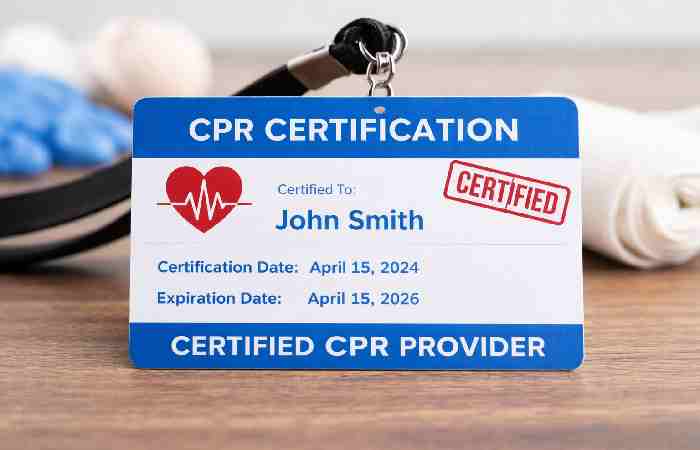
A CPR card is a formal certifying document that is issued upon the completion of a CPR training course by an accredited body. Such a card will prove the fact that the person has been trained to give life-saving procedures, namely:
- Chest compressions
- Rescue breathing
- Application of Automated External Defibrillator (AED).Choking relief techniques
These courses are usually provided by recognised training organisations and are typically valid for one to two years before renewal is required.
Common Skills Learned in CPR Training
| CPR Skill | Description |
| Chest Compressions | Applying pressure on the chest to maintain blood circulation |
| Rescue Breathing | Providing breaths to a person who has stopped breathing |
| AED Operation | Using an Automated External Defibrillator to restore heart rhythm |
| Choking Assistance | Helping a choking victim clear their airway |
| Emergency Response | Recognizing signs of cardiac arrest and calling emergency services |
Professionals who work in environments where emergencies might occur are often required to maintain these skills through regular certification updates.
5 Professions That Require You To Have a CPR Card
| Profession | Reason CPR Certification is Required | Typical CPR Type |
| Healthcare Providers (Doctors, Nurses, Paramedics) | Must respond to cardiac arrests and medical emergencies in hospitals and clinics. | BLS (Basic Life Support) |
| Childcare Workers & Teachers | Responsible for the safety of children who may experience choking, drowning, or sudden illness. | Pediatric CPR / Heartsaver CPR |
| Lifeguards & Swim Instructors | High risk of drowning emergencies at pools, beaches, or water parks. | CPR/AED for Adults, Children, Infants |
| Fitness Trainers & Coaches | Need to respond to sudden cardiac arrest or injuries during physical activity. | CPR/AED for Adults |
| Emergency Responders (Firefighters, Police) | Frequently encounter situations where immediate CPR can save lives before medical teams arrive. | BLS / CPR with AED |
1. Healthcare Professionals
Healthcare Professionals
Apparently, one of the most conspicuous careers that should be CPR certified is healthcare workers. Patients who are in conditions which are life-threatening are usually dealt with by doctors, nurses, medical assistants and paramedics.
Sudden cardiac arrest, respiratory failure, and other emergencies may happen any moment in hospitals and clinics. Medical workers should be ready to administer CPR within a short period of time.
The Services of CPR in Healthcare.
The individuals in the medical facilities might be already experiencing severe cases of health problems. This enhances a chance of emergency namely:Heart attacks
- Cardiac arrest
- Respiratory distress
- Severe allergic reactions
When these events occur, healthcare professionals must initiate CPR immediately while additional medical support arrives.
Responsibilities of CPR-Certified Healthcare Workers
| Responsibility | Description |
| Monitoring patient vitals | Detect early signs of distress |
| Performing CPR | Maintaining circulation during cardiac arrest |
| Using medical equipment | Operating defibrillators and oxygen devices |
| Coordinating emergency response | Working with medical teams during crises |
Because of these responsibilities, CPR certification is a mandatory requirement for most healthcare roles.
2. Lifeguards
Lifeguards are responsible for protecting swimmers at pools, water parks, lakes, and beaches. Since water environments carry the risk of drowning, CPR training is a critical requirement for this profession.
Drowning incidents can happen quickly and silently. A lifeguard must act immediately to rescue the victim and begin resuscitation procedures if necessary.
Importance of CPR for Lifeguards
When a person nearly drowns, they may stop breathing due to water entering the lungs. CPR helps restore breathing and circulation.
Typical Lifeguard Emergency Scenarios
| Scenario | CPR Response |
| Drowning victim pulled from water | Perform rescue breathing and chest compressions |
| Swimmer loses consciousness | Begin CPR and call emergency services |
| Child inhales water | Monitor breathing and provide assistance |
| Cardiac arrest near pool | Use AED and CPR immediately |
Because lifeguards are often the first responders in water emergencies, their CPR skills are essential for saving lives.
3. Fitness Trainers and Gym Instructors
Fitness professionals guide individuals through workouts that may involve intense physical activity. Exercise places stress on the cardiovascular system, especially for people with underlying health conditions.
Although rare, cardiac emergencies can occur during workouts, particularly among individuals with heart disease or those engaging in strenuous exercise.
Why Fitness Trainers Need CPR Certification
Fitness instructors must ensure the safety of gym members during physical activity.
CPR training helps them respond effectively if a person experiences:
- Sudden cardiac arrest
- Heat exhaustion or collapse
- Severe breathing difficulties
- Exercise-induced medical emergencies
Emergency Situations in Gyms
| Situation | Trainer’s Response |
| Member collapses during workout | Begin CPR and call emergency services |
| Cardiac arrest during intense exercise | Use AED and perform CPR |
| Breathing difficulty | Assist and monitor until help arrives |
Many gyms require their trainers to hold both CPR and AED certification as part of employment requirements.
4. Childcare Providers and Teachers
Professionals who work with children have a strong responsibility to ensure their safety. Daycare workers, preschool teachers, and school staff often require CPR certification because young children can be vulnerable to accidents and medical emergencies.
Children may experience situations such as choking, breathing difficulties, or allergic reactions. Quick intervention is essential.
Why CPR Is Important in Childcare
Children are naturally curious and active, which increases the likelihood of accidents.
CPR training prepares childcare providers to respond to emergencies such as:
- choking incidents
- breathing problems
- allergic reactions
- sudden cardiac arrest
Common Emergencies in Childcare Settings
| Emergency | Required Response |
| Child choking on food | Perform choking relief techniques |
| Child stops breathing | Begin CPR immediately |
| Severe allergic reaction | Call emergency services and monitor breathing |
| Playground injury | Provide first aid and monitor condition |
Many childcare licensing authorities require CPR certification to ensure staff can protect the children under their care.
5. Emergency Responders
Emergency responders include professionals such as firefighters, police officers, and rescue personnel. These individuals are often the first to arrive at accident scenes.
Because they frequently deal with medical emergencies, CPR certification is mandatory for this profession.
Role of CPR in Emergency Response
Emergency responders may encounter situations such as:
- car accidents
- cardiac arrest cases
- drowning incidents
- workplace injuries
In these scenarios, CPR is often performed before the patient reaches a hospital.
Responsibilities of Emergency Responders
| Duty | Description |
| Assess emergency scene | Ensure safety and identify victims |
| Perform CPR | Maintain blood flow during cardiac arrest |
| Provide first aid | Stabilize injured individuals |
| Coordinate rescue operations | Work with paramedics and hospitals |
Their ability to act quickly can significantly increase survival rates during emergencies.
The rationale of CPR Certification in certain professions
The rationale for requiring CPR certification in certain professions is primarily based on safety, responsibility, and preparedness. Here’s a detailed explanation:
- Immediate Life-Saving Capability
Some professions place individuals in situations where sudden cardiac arrest, choking, or breathing emergencies can occur. CPR certification ensures the person can act immediately to save lives before professional medical help arrives.
Example: Lifeguards, healthcare workers, and fitness trainers often encounter emergencies where seconds matter.
- Legal and Regulatory Compliance
Many workplaces are legally required to have staff trained in CPR to reduce liability and comply with health and safety regulations.
Example: Schools and childcare centers must have staff trained in pediatric CPR to meet regulatory standards.
- Protection of Vulnerable Populations
Professions that involve children, elderly, or patients with medical conditions require CPR-trained personnel because these groups are more susceptible to emergencies.
Example: Teachers, childcare workers, and nurses.
- Professional Credibility and Trust
Holding a CPR card demonstrates that the professional is competent, responsible, and prepared, increasing trust with employers, clients, and the public.
Example: Personal trainers and coaches with CPR certification are considered safer and more reliable.
- Emergency Preparedness in High-Risk Environments
Certain roles frequently operate in high-risk environments (sports, water, emergency response). CPR certification ensures they maintain calm and effective action during critical situations.
Example: Firefighters, police officers, and paramedics often respond to accidents or emergencies requiring immediate resuscitation.
Example Companies of CPR Card
Here are some example organizations and companies that provide CPR training and issue CPR cards:
| Organization / Company | Description / Services | Region / Availability |
| American Heart Association (AHA) | Offers CPR, AED, and Basic Life Support (BLS) courses with certification cards. | Global (including India, USA, UK) |
| American Red Cross | Provides CPR, AED, and first aid training for individuals and workplaces. | Global |
| St. John Ambulance | Offers CPR and first aid courses with certification recognized in workplaces. | UK, India, Australia, Canada |
| National Safety Council (NSC) | CPR and emergency cardiovascular care training for professionals and public. | USA |
| ProCPR | Online and blended CPR training programs with certification cards. | USA, Canada, parts of Asia |
| Indian Heart Association | Provides CPR and AED training across India with official certification. | India |
| Red Cross India | Offers CPR, AED, and basic life support courses for individuals and corporates. | India |
| CPR Training Center (Local/Regional Providers) | Many local hospitals, clinics, or training centers issue official CPR cards after training. | Regional / Local |
Benefits of Having a CPR Card
Even outside professional requirements, CPR certification offers several valuable benefits.
- Ability to Save Lives
It is most evident in the fact that anyone will be able to save the life of someone in a cardiac emergency.
- More Employment Opportunities.
CPR certification is an important skill to job seekers as many employers favor it or even demand it.
- Workplace Confidence
This gives the employees more confidence since they are assured that they can respond to an emergency.
- Community Safety
CPR-trained persons can help to make the community safer, as they are ready to help others.
How to Get a CPR Card?
To become CPR certified, it is generally necessary to take a course with a certified inductor.
Steps to Get Certified
| Step | Description |
| Enroll in training | Register for a CPR course |
| Attend instruction | Learn techniques from certified trainers |
| Practice skills | Perform CPR on training mannequins |
| Pass assessment | Demonstrate proper CPR procedures |
| Receive certification | Obtain CPR card valid for a specific period |
Many training programs can be completed within a single day.
Conclusion
Being able to perform appropriate actions in the situations when people are in danger, a CPR card is not only a certification, but the gift. This type of training is required in most professions as the employees in these businesses are entrusted with the duty of the safety and health of other individuals.